Charleston gets heavy rain, high humidity, and storm seasons that test every part of your exterior. Gutters take the first hit. When they fail, water moves where it should not. It soaks fascia, rots trim, stains siding, floods crawl spaces, and erodes landscaping. If you are searching for a gutter company Charleston, you want two things. Fast results and work that lasts.
This guide breaks down what gutters should do, what systems fit Charleston homes, what to ask before you hire, and what a good install looks like.
Why gutters matter in Charleston
Gutters control roof runoff and move it away from your foundation. That sounds basic. The damage from poor drainage is not.
Common problems Charleston homeowners see when gutters underperform:
– Overflow during downpours that stains siding and soffits
– Standing water near the foundation that leads to settlement and moisture problems
– Crawl space humidity that feeds mold and wood decay
– Landscape washouts that ruin beds and hardscapes
– Mosquito breeding in clogged sections and sagging runs
Charleston’s weather makes small defects grow fast. A tiny pitch issue can become constant overflow. One loose hanger can turn into a full run pulling away.
Signs you need a gutter company now
You do not need to wait for a leak indoors. Gutters show you when they are struggling.
Look for these warning signs:
- Water spilling over the front edge during rain
- Gutters pulling away from fascia or visibly sagging
- Rust spots, cracks, or seam leaks
- Peeling paint or soft wood along the roofline
- Pooling water near downspouts
- Downspouts dumping right at the foundation
- Plants growing out of the gutter
- Gutter guards packed with debris
If you see two or more, schedule an inspection. Charleston storms do not give you long grace periods.
Gutter systems that work well in Charleston
A good gutter company Charleston should recommend the right system for your roof size, pitch, and runoff patterns.
- Seamless aluminum gutters
- Most common choice in coastal South Carolina
- Fewer leak points than sectional gutters
- Good balance of cost and durability
- Available in many colors to match trim
- Seamless steel gutters
- Stronger than aluminum
- Better for long runs and high water volume
- Higher cost
- Needs quality coating to resist corrosion
- Copper gutters
- Long life and premium look
- Higher upfront cost
- Works well on historic style homes when installed correctly
- Requires skilled fabrication and clean soldering or tight seams
Gutter size. 5 inch vs 6 inch
Many Charleston homes do fine with 5 inch gutters. Some do not.
- Choose 6 inch when
- You have a steep roof that sheds water fast
- You have large roof planes with few downspouts
- You see overflow in heavy rain even when gutters are clean
- You want a wider trough to reduce clog risk
A solid contractor will do the math. They will not guess.
Downspouts and drainage matter as much as gutters
Most gutter failures in Charleston are really drainage failures.
What to look for
- Enough downspouts for the roof area
- Downspouts placed where valleys dump heavy flow
- Extensions that carry water at least 4 to 6 feet away from the home
- Splash blocks or buried drains where needed
- No discharge onto walkways that become slick
- No discharge into crawl space vents
If a company only talks about gutters and ignores where the water ends up, keep looking.
What a quality gutter install includes
A professional gutter company Charleston will follow a process. You should see these steps.
-
Inspection and plan
They check fascia condition, roof edge, drip edge, and shingle overhang. They map runoff points, valleys, and problem zones. -
Correct pitch
Gutters need a steady slope toward downspouts. Too flat causes standing water. Too steep looks wrong and can overflow. -
Proper fastening
They use hidden hangers spaced correctly for local rain loads. They anchor into solid framing, not just thin fascia. -
Strong corners and end caps
Corners are a common leak point. Good installers seal and fasten them cleanly. They avoid sloppy caulk lines. -
Clean tie ins
They align downspouts, straps, and elbows tight to the wall. They avoid crushing siding or leaving gaps. -
Water test
They run water through the system to confirm flow and spot leaks before they leave.
If you do not see a water test, ask for it.
Gutter guards in Charleston. Worth it or not
Guards can help. They can also fail if they are the wrong type for your roof and debris.
Common Charleston debris:
- Pine needles
- Oak leaves
- Small seed pods and grit
- Roof granules
Guard options
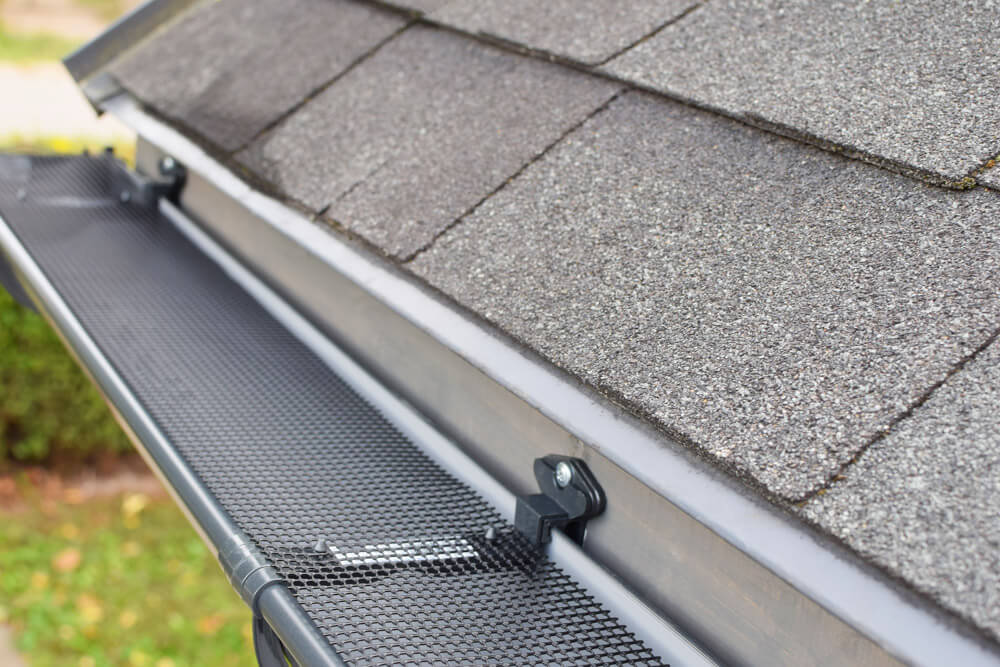
- Micro mesh. Blocks small debris, needs periodic rinse, works well when installed with correct angle.
- Screen. Cheap, clogs with small debris, often bends and lifts.
- Foam inserts. Trap debris, can grow algae, not ideal in humid climates.
- Surface tension covers. Can shed water in heavy rain if not designed right.
If you want guards, ask the company to explain how they handle pine needles and heavy downpours. Ask what maintenance you still need. A truthful answer is that all systems need some upkeep.
Questions to ask a gutter company Charleston before you hire
Use these questions to filter quickly.
- How do you size gutters and downspouts for my roof
- Do you install 6 inch systems when needed
- What hanger type do you use and how far apart
- Will you replace damaged fascia or coordinate that repair
- How do you seal corners and end caps
- Do you include downspout extensions or drains
- Do you provide a workmanship warranty in writing
- Can you show local projects in Charleston neighborhoods
- Will you do a final water test
A reliable company answers fast and clearly. They do not dodge details.
Cost factors you should understand
Pricing varies by material, size, height, complexity, and drainage work.
- What drives cost up
- Two story installs and steep rooflines
- 6 inch gutters and larger downspouts
- More corners and short runs
- Hidden rot repairs at fascia
- Buried drain lines and pop up emitters
- Premium materials like copper
What drives long term value
- Correct sizing that prevents overflow
- Strong fastening that resists storms
- Good drainage routing away from the foundation
- Warranty and service response after severe weather
Maintenance tips for Charleston homeowners
Even the best install needs basic care.
Do this:
- Clean gutters at least twice per year, more if you have pine trees
- Check after major storms for loose straps and clogged downspouts
- Flush downspouts with a hose to confirm flow
- Keep soil graded away from the home
- Extend discharge away from the foundation
If you see overflow, do not assume it is just a clog. It can be pitch, sizing, or a downspout issue.
Choosing the right gutter company in Charleston
You want a team that treats your gutters as a drainage system, not just metal on the fascia. Look for clear sizing logic, strong install methods, and practical drainage solutions. Ask for a written scope and warranty. Then judge them by their answers, not their sales pitch.
If you want your home to handle Charleston rain without damage, start with gutters that fit your roof and downspouts that move water away. That is what a good gutter company Charleston should deliver.